
A business website must clearly answer six questions: what the business offers, for whom, where it serves, why it deserves trust, how it works and what the next step is. The structure must accompany these doubts. This way, the person finds enough information to decide whether they want to learn about the service or get in touch.
This is especially true for local businesses. A person can arrive via Google looking for a modality, a professional or a specific address. If the website explains the offer, the service region and how to move forward, she can evaluate the business without depending on a conversation to discover the basics.
What questions should guide the structure of the website?
Before designing the homepage, list the questions a person would ask before hiring or visiting the business. Then group answers that belong to the same topic. This organization helps you decide which information fits on the home page and which needs its own pages.
- What is offered and to whom?
- What services, products or modalities are available?
- Who works and what experience do they have?
- Where is the business located and what hours does it open?
- How can I ask a question, schedule or request a quote?
What to include on each page on the business website?
1. Home page: offer and next step
The opening must identify the business and explain its offer in direct language. Add information that helps people recognize whether they are in the right place, such as the target audience, specialty or region. Then, indicate a coherent action: see the services, check schedules, visit the space or talk to the team.
2. Services or products: one explanation per offer
Describe each service with what it includes, who it was designed for and how people can find out more. When offers meet different needs, separate pages or sections help explain each one without turning the home into a confusing catalog. Use names that customers recognize and avoid relying on internal jargon.
3. About and Team: Context that helps build trust
Present the people, experience and way of working that are relevant to the choice. A short story is most useful when it explains why the business exists, what drives service, or what the team knows well. Only include information that can be confirmed and that helps the person evaluate the service.
4. Evidence: concrete and authorized examples
Testimonials, projects, reviews and photographs can show how the business works. Choose materials related to the offer presented and explain the context when necessary. Ask for permission to publish customer reports or images and do not treat institutional numbers as if they were the result of a specific change on the website.
5. Location and operation: ready-to-use information
For a business with in-person service, provide the address, neighborhood or region, hours and ways to get there. If the service is remote or covers more than one city, explain this scope. Keep this data up to date and consistent on the pages where it appears.
6. Contact: Make it clear what happens next
Show an easy-to-find contact channel and say what the person can do for you: schedule, request information or request a quote. If there is a form, ask for only the data necessary to start the conversation. The button must lead to the advertised channel and continue to work on the cell phone.
How is the Fits You website structured?
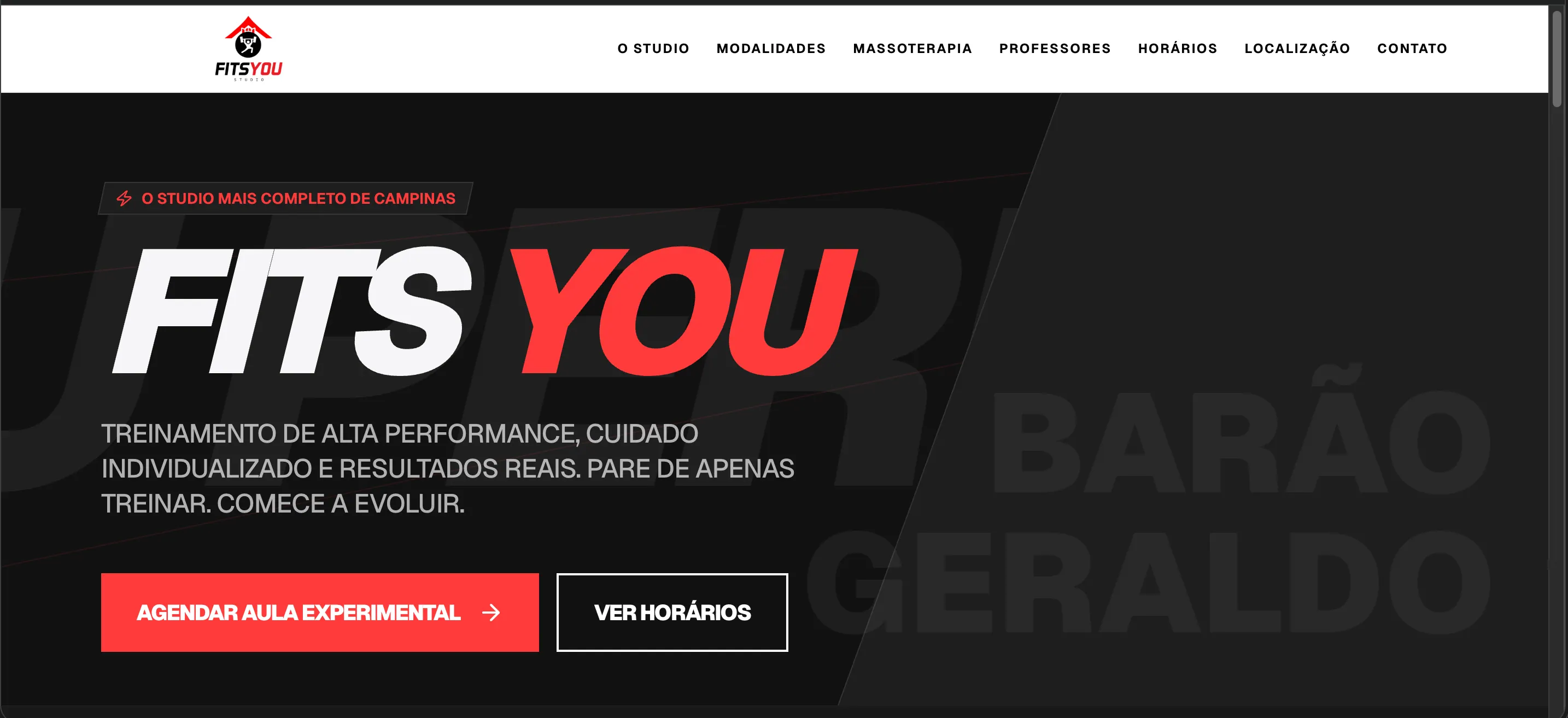
On the Fits You Studio website, modalities, team, times, location and contact appear as their own paths. This organization helps present cross training, Pilates and recovery under the same brand, while allowing each person to search for the information they need. The project has no published conversion data; Here, the example shows the structure and content decisions documented in the case.
You can see the screens and decisions inFits You Studio case. The number of pages is not a rule: it depends on the offers, recurring questions and information that needs to be found separately.
Business website or landing page?
A business website presents the business and allows you to explore different topics. A landing page focuses communication on a specific offer, campaign or action. If a person needs to evaluate several areas of the company, a website with clear navigation tends to serve best. If you already know the context and need to understand a delimited offer, a landing page can organize this path.
What to check before publishing?
- The homepage explains what the business does and for whom.
- Each service has a description that can be understood without internal knowledge.
- Address, opening times, regions served and contacts are up to date.
- Images and testimonials have context and authorization for use.
- Links and contact channels work on a cell phone screen.
- Each important page has a descriptive title and can be found through the site navigation.
A well-thought-out structure reduces avoidable doubts and helps the person choose the next path. If you are organizing a business website or a landing page, get to know my work withwebsites and landing pages.